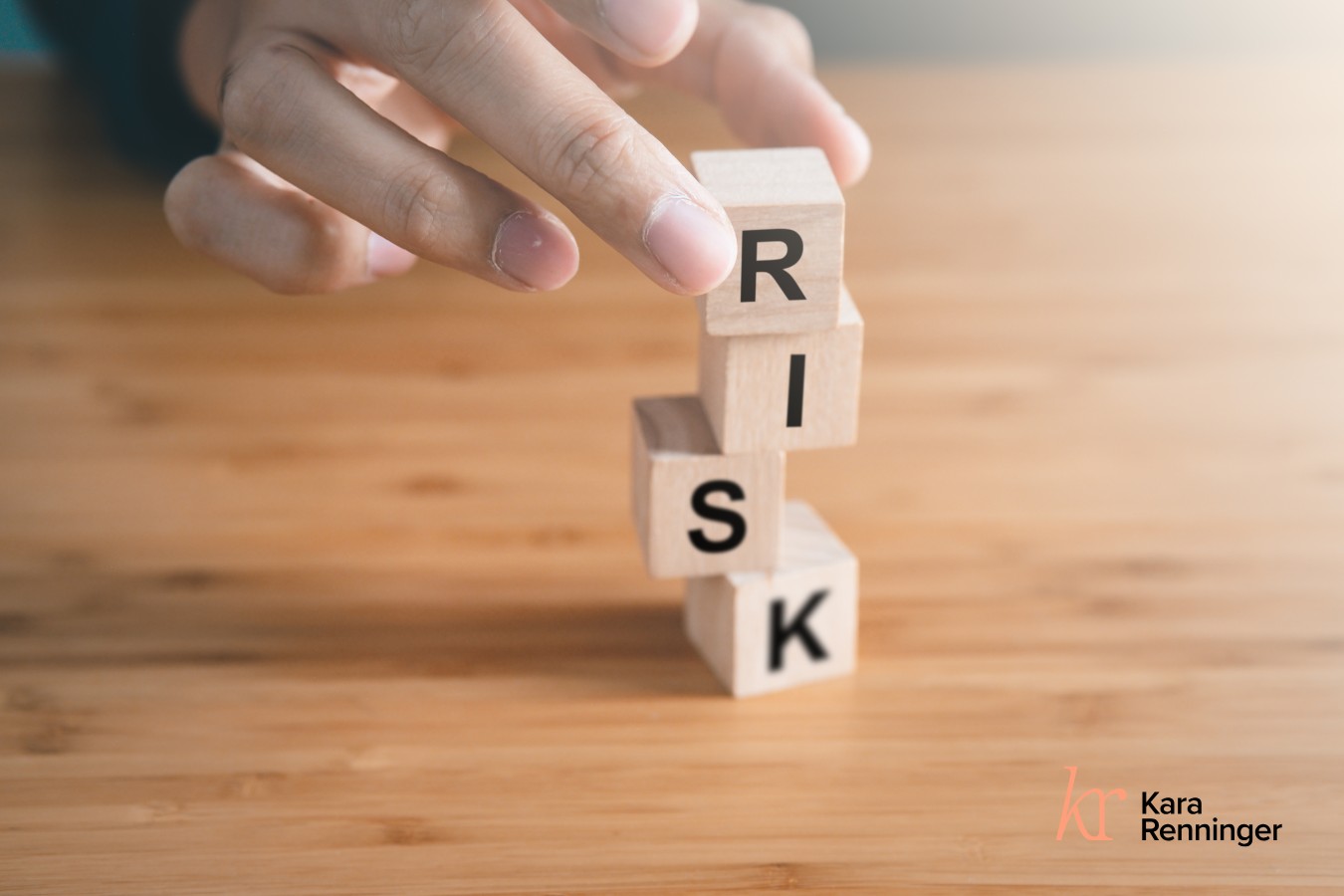
When you think of mapping your business’s future, you probably envision bold growth, new markets, more clients, and robust revenue. But if we skip the “what if” questions – those unsexy, but absolutely critical risks – then our growth becomes shaky.
That’s why, in 2026, I’m inviting you to build a Risk Map – a clear strategic overlay of threats and responses – so you can scale confidently, without surprises. Here’s how to get started.
Why a Risk Map Matters
Most entrepreneurs I work with have tremendous vision: they see what’s possible. What they don’t always have is a “what could go wrong” mindset that’s aligned with their “what’s possible” mindset. A risk map brings both worlds together: you remain future-driven, while also anchored in realism. It allows you to:
- Anticipate external shockwaves before they arrive
- Strengthen your internal operations so they don’t collapse under growth pressure
- Protect your offer, your brand, your people, and your clients
- Build the kind of business that isn’t just growth-hyped but built to last
In other words, a risk map helps you avoid the trap of scaling fast without scaling stably.
Step 1: Identify Your Threat Zones
Let’s kick off with threat identification – mapping the specific areas of your business where risk lives. I suggest breaking your map into four zones:
Market & Competition
- What happens if a competitor launches a better offer?
- What if your niche shifts or the economic climate softens?
- What if your signature client profile disappears or changes in behavior?
Operational / Internal Infrastructure
- Do you have single points of failure (one key person, one vendor, one process)?
- Could your systems collapse if volume doubles or you scale rapidly?
- Are your tech, team, and processes aligned for growth – or just volume?
Financial & Cash-Flow
- What if revenue lags for three months? What’s your runway?
- What if a large client cancels or payment is delayed?
- What external costs surprise you (insurance, compliance, regulation)?
Brand & Reputation
- What happens if something goes wrong publicly (social media, client dissatisfaction, legal)?
- Have you built brand equity that can survive shifts?
- Is your client experience so consistent that you avoid the “one bad case” risk?
Once you list these threats, rate them (e.g., high/medium/low) in terms of likelihood and impact, so you can prioritize.
Step 2: Prepare Your Responses & Mitigation
Identifying risk isn’t enough; you must prepare. For each threat zone, you’ll want to create response strategies. Think of this as your risk-management module of your business strategy. Here are examples:
- For a competitor threat: build a unique value proposition that can evolve, monitor emerging players quarterly, diversify your offer so you’re not solely vulnerable to one.
- For operational failure: map all your processes, build redundancy, cross-train team members, document everything.
- For cash-flow risk: maintain a buffer, have alternate revenue channels, review costs monthly, prepare a contingency plan for trimmed expenses.
- For reputation risk: establish your communication guidelines, monitor client feedback systems, create a rapid-response plan if negative issues arise.
Your Risk Map then becomes a living document: threat + response + owner + timeline. Review it regularly (quarterly is good) and integrate it into your core business strategy.

Integrate into your 2026 Strategic Plan
Now here’s the real magic: you don’t treat the Risk Map separately from your growth plan; you blend them. When you build your 2026 business strategy, you ask: “How does this growth initiative perform under stress? What risk could derail it? What steps are in place to protect it?”
For example, if you plan to launch a new premium offer, you evaluate: what if the launch fizzles, what if demand is weaker, what if the economic context changes? So you build the offer, and you build the fallback scenario. That kind of integration makes your growth strategy resilient.
How a Business Consultant Can Help You Build Your Risk Map
Working with the right consultant can accelerate and deepen your Risk Map development. Here’s how someone like me can support you:
- Objective assessment: You’re immersed in your business. A consultant brings fresh eyes and can spot hidden threats, internal weaknesses, or blind spots you may not see.
- Framework & process: We provide structured tools (threat matrix, mitigation workbook, review cadence) so your risk mapping is systematic, not ad-hoc.
- Integration into strategy: A consultant helps you fold risk management into your strategy plan, ensuring it’s not an afterthought but a core component.
- Accountability and implementation: Identifying risks is one thing; acting on them is another. A consultant helps you assign owners, set timelines, and track progress.
- Continuous review: Business environments shift. A consultant can schedule review checkpoints, adjust risk profiles, and help you stay nimble and adaptive.
In short: you get more than a “list of risks.” You build a robust architecture of foresight + action.
--
Take 30 minutes this week to create the skeleton of your Risk Map. Choose one threat from each zone (market, operational, financial, brand) and craft a corresponding response strategy. Then, lock in who on your team owns it, how you’ll measure it, and when you’ll review it.
By doing this, you’re not just planning for growth; you’re planning for stability, sustainability, and confidence. And when 2026 throws you curveballs (it will), you’ll already have your glove, mitt, and game plan ready.
Here’s to a year of purposeful growth – with the foundation to stand strong no matter what comes. Let’s build something remarkable and resilient together.
Ready to work with a business strategy consultant with over 15 years of experience…
…someone who has transformed businesses, skyrocketing their revenue?